
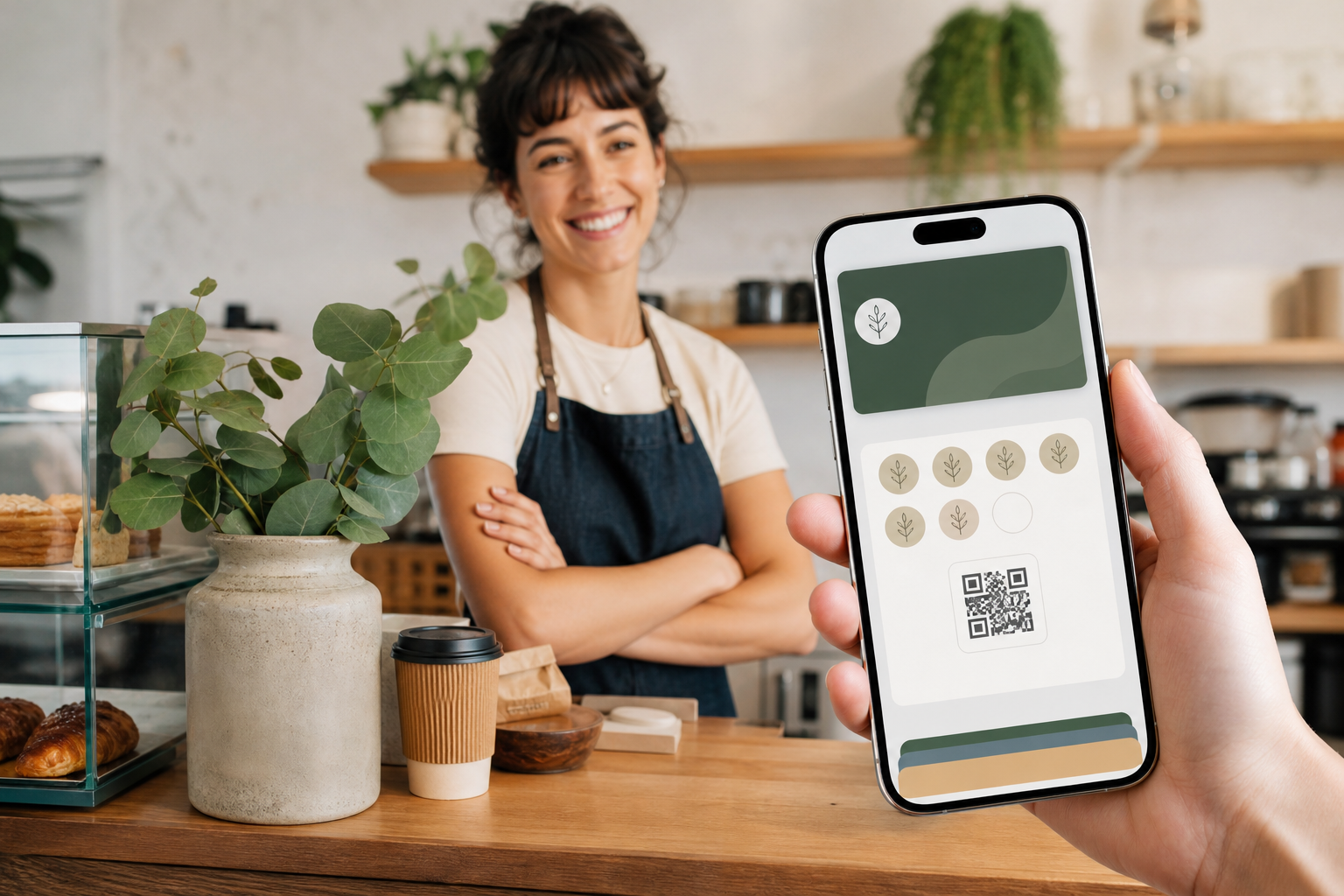
Paper punch cards disappear in coat pockets. Shop-specific loyalty apps rarely get downloaded. A digital loyalty card for small business that lives in Apple Wallet or Google Wallet removes both frictions: customers save a pass to the wallet already on their phone, and you can update stamps and send return-visit reminders without asking anyone to install another app.
This guide explains how wallet stamp cards work, what the available evidence says about add rates and repeat visits, and how to set one up for an independent shop.
How wallet loyalty cards work
A customer scans a QR code at your counter or taps a link on their phone. The pass opens in Apple Wallet on iPhone or Google Wallet on Android. They tap Add, and the loyalty card appears alongside their credit cards and transit passes. No separate app to download, no username to remember.
Once the pass is in their wallet, you can update it remotely. When a customer earns a stamp, the pass updates to show the new count. When they qualify for a reward, the pass reflects that. You can also send messages to the pass—a reminder that they are two stamps from a free coffee, or a notice about double-stamp weekend.
Apple Wallet passes can display relevant information on the lock screen and receive updates through a pass-management service. Google Wallet supports pass messages, update notifications, and can surface nearby loyalty cards when customers have enabled location permissions. Both systems let you communicate without SMS fees or email filters.
The key difference from paper: the pass stays in the customer's pocket, digitally. The key difference from a branded app: you are using infrastructure already installed on every smartphone.
What the numbers suggest about wallet card adoption
A 2026 dataset from one wallet-pass provider analyzed 185,229 passes issued by 2,751 businesses over six months. The median add rate for loyalty cards was 38 percent. That figure is a directional benchmark from a single vendor sample, not an industry-wide standard, but it offers a useful reference point.
In the same dataset, passes that included a logo had a 42 percent add rate, compared with 25 percent for passes without one. Make the pass recognizable, and show customers the add-to-wallet step while they are at the counter.
Timing matters for enrollment. The provider reported that 55 percent of Apple Wallet adds happened within 30 seconds, and 41 percent of Google Wallet saves within 30 seconds. Invite customers to join while they are paying, when their phone is already in hand and the transaction is top of mind.
These figures describe what happened in one sample. Your add rate will depend on how clearly you explain the offer, how easy you make enrollment, and whether your staff consistently mention the program. Track your own numbers from week one.
Repeat visits and reminder timing
A separate provider analyzed more than 40,000 digital loyalty cards across 50-plus businesses. The study found that 21.9 percent of new members returned within a week, 42.5 percent within 30 days, and 56 percent within 90 days. The typical return interval overall was 15 days, with reported variation by trade: 11 days for bakeries and sweet shops, 15 for coffee shops, 18 for restaurants and bistros, and 27 for beauty, nails, and fitness.
These are vendor-sample findings, not universal benchmarks. They do suggest that reminder timing should match your shop's natural purchase cycle rather than a generic weekly schedule.
The same study found that 54.3 percent of members who returned in their first full month were still visiting 10 to 12 months later, compared with 20.1 percent of members who did not return in that first month. This is an association, not proof that the wallet card or reminder caused the retention. Still, it supports treating the first repeat visit as a key milestone worth optimizing for.
Set your first reminder based on when a regular customer would normally be due back. If your coffee shop sees the same faces every other day, a reminder after three days might make sense. If you run a nail salon with four-week appointment cycles, a reminder at three weeks might prompt rebooking. Test and adjust based on actual return visits, not message open rates.
Setting up a wallet stamp card for your shop
You will need a wallet-pass service or integration that connects to your point-of-sale system. Confirm whether the service supports Apple Wallet, Google Wallet, or both, and whether it can trigger reminders based on time since last visit, stamp progress, or reward availability.
Start with one simple offer. Buy nine coffees, get the tenth free. Earn six stamps, get a free sandwich. Put the reward and the terms directly on the pass so customers understand the deal at a glance.
Generate a QR code that opens the wallet pass. Place the code at checkout, print it on receipts, or add it to menus and packaging. Train staff to say, at the till: Save this to your wallet and earn a free drink. The fast add times observed in the data make the checkout moment a practical enrollment opportunity.
Set the first reminder using your actual repeat-purchase interval. For example, if your bakery typically sees customers twice a week, test a message on day four: You are halfway to a free pastry. If you run a coffee shop with daily regulars, a reminder after two days of absence might make sense. The trade-specific intervals from the vendor study offer starting hypotheses, not rules. Adjust based on what you see in your own visit data.
Send useful, specific prompts. You are two stamps from a free drink. Double stamps this Saturday. Redeem your reward before it expires. Google Wallet supports messages and update notifications; Apple Wallet passes receive updates through pass-management services. Both systems let you communicate without SMS costs.
Measure what matters: offers made, wallet cards added, first repeat visit within 30 days, reward redemption, and visits per member over time. Compare results with a similar period or a customer group that did not receive reminders. Do not treat message delivery or open rates as proof of incremental sales. Track actual visits and purchases.
What wallet passes can and cannot do
Wallet passes make enrollment faster and reminders more visible. They do not automatically build a marketing strategy. You still need to decide what to say, when to say it, and what offer will bring someone back.
One vendor report from 2026 claims 99 percent delivery and read rates for wallet notifications. Treat that figure cautiously. It is not a broadly established independent benchmark, and delivery is not the same as a customer opening the message, visiting your shop, or making a purchase. Focus on redemptions and repeat visits instead.
Google Wallet can surface nearby loyalty cards when customers have enabled location permissions and notifications. Google controls the precise proximity behavior, so you cannot force a pass to appear at a specific distance from your shop. Apple Wallet passes can display relevant information on the lock screen based on time or location relevance, configured through your pass provider.
Both wallet systems work without requiring customers to install a shop-specific app, but you typically need a service or technical setup to create passes, update stamps, and send messages. Confirm that your chosen provider integrates with your POS or offers a manual stamp-update workflow if you do not have a connected till.
Making wallet loyalty work for an independent shop
A digital loyalty card for small business succeeds when it makes repeat visits more convenient for customers and more measurable for you. The available 2026 figures are mostly vendor-reported samples—useful as directional evidence, not as guaranteed outcomes.
Test reminder timing against your natural purchase cycle. Make enrollment easy at the moment of purchase. Measure actual repeat visits and reward redemptions, not proxy metrics. Adjust your message cadence and offers based on what you see in your own shop.
Wallet stamp cards offer an app-free way to stay visible between visits. The infrastructure is built into every smartphone. The question is whether you use it to send prompts that customers find helpful rather than intrusive, and whether you measure the results honestly enough to know the difference.
Sources
- Add Loyalty Cards to Google Wallet (2026) - Perkstar
- How Digital Loyalty Programs Help Small Businesses Retain Customers
- Wallet Pass Statistics 2026: Benchmark Report | Regulr Blog
- Do loyalty programs work for small businesses? What the data shows
- Wallet Pass Statistics 2026: Apple vs Google, Add Rates, Timing
- Google Wallet Loyalty Cards in 2026: What Changed and Why It ...
- Digital Loyalty Program Results: Small Business Benchmarks (2026)
- Digital Loyalty Cards vs Loyalty Apps: Which Is Better for SMBs in 2026?
- Google Wallet Loyalty Card for Small Business | BTAQA
- Loyalty Card in Apple Wallet & Google Wallet for Small ...