
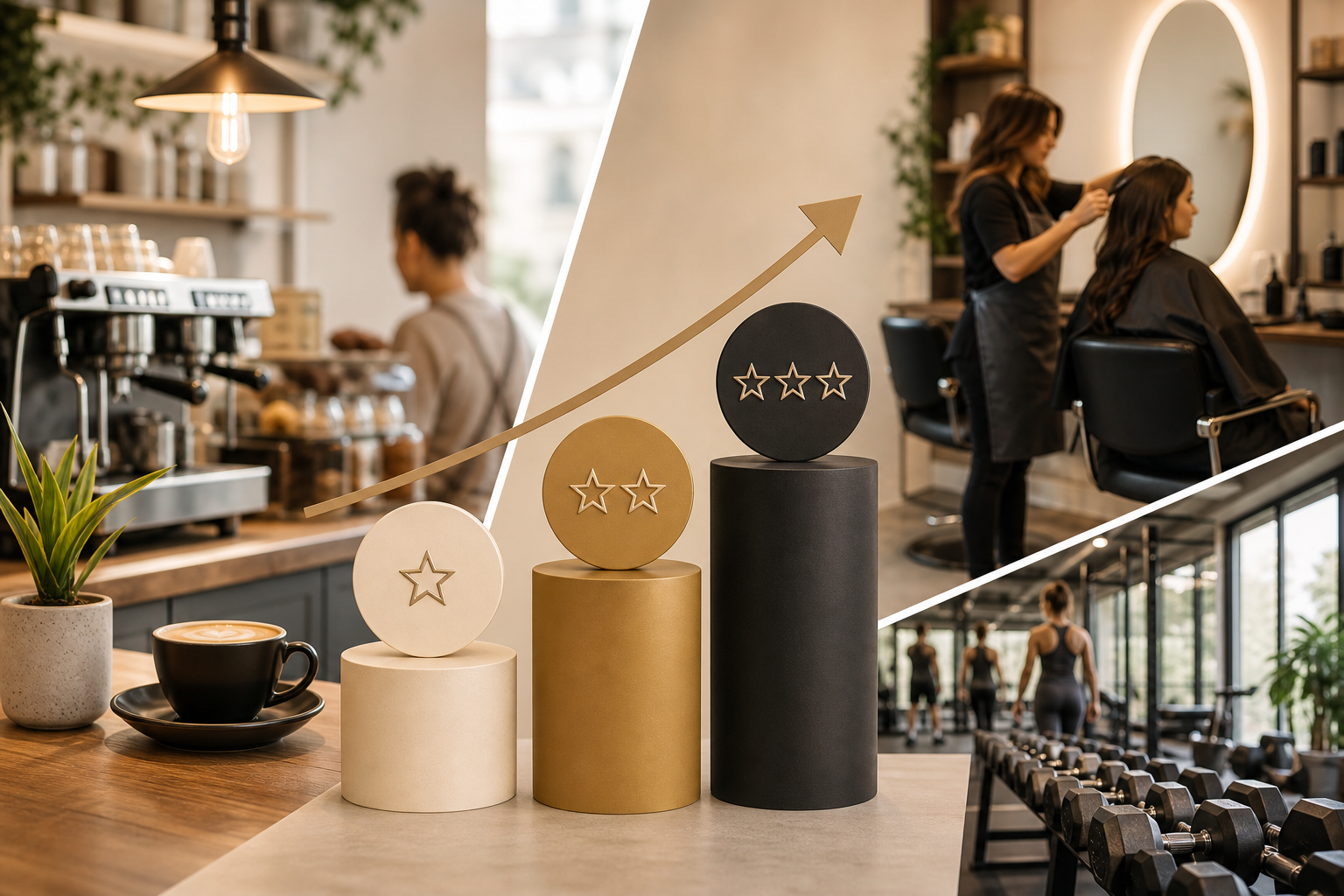
Loyalty programs that are measured typically produce 5.2x revenue versus cost. Tiered loyalty program ROI beats flat programs by about 1.8x. That difference is not marginal. For a cafe, salon, or gym, adding a VIP tier to a free program can mean an extra few hundred pounds per customer over three years, before you touch margin.
This post walks through the spreadsheet math. You will see exactly how tiering lifts customer lifetime value, what the incremental revenue looks like for three common shop types, and when a VIP layer justifies the extra work.
Why tiered loyalty program ROI matters now
Eighty-three percent of program owners who measure ROI report a positive return. The median measured program generates 5.2x more revenue than it costs, up from 4.8x the prior year. That improvement reflects better targeting and clearer behavior design, not just more generous rewards.
Tiering contributes to that efficiency. A tiered structure lets you reward your top customers more aggressively without giving the same perks to occasional visitors. The result is higher spend, more visits, and longer retention in the segment that matters most.
VIP-tier members generate an average order value around 435 pounds versus 291 pounds for non-tier customers, and they make 3.6x more purchases annually. Those are the customers who compound your revenue. A free-only program captures some of that lift. A free-plus-VIP model captures more.
How customer lifetime value changes with tiering
Customer lifetime value is average visit value multiplied by visits per year, multiplied by years retained. Even small improvements in each variable produce large cumulative gains.
A commonly cited benchmark is that a 5 percent increase in retention can raise profits by 25 to 95 percent. Tiering helps retention because it gives high-frequency customers a reason to stay engaged. It also nudges basket size and visit frequency upward through exclusive perks, early access, or faster points accrual.
Here is the simplest way to model the difference. Start with your current average ticket, annual visit count, and typical customer lifespan. Then apply conservative assumptions for a VIP tier: a modest lift in ticket size, a small increase in visit frequency, and slightly longer retention. The incremental revenue is the difference between the two scenarios, multiplied by the number of VIP customers you expect.
Cafe model: free-only versus free-plus-VIP
Assume a cafe customer spends 12 pounds per visit and comes twice a month, or 24 times a year. Annual revenue per customer is 288 pounds. Over three years, that customer is worth 864 pounds.
Now add a VIP tier. The customer gets a small perk, faster points, or exclusive drinks. Average ticket rises to 12.50 pounds. Visit frequency increases to 2.5 times a month, or 30 visits a year. Annual revenue becomes 375 pounds. Over three years, 1,125 pounds.
The incremental gain is 87 pounds per year, or 261 pounds over three years, per VIP customer. If 15 percent of your active base qualifies for VIP and you have 400 active customers, that is 60 VIP members. Total incremental three-year revenue is 15,660 pounds before margin.
That calculation assumes no additional cost beyond the rewards you already budget. If your VIP perks are exclusive products or experiences rather than pure discounts, margin impact can be neutral or even positive.
Salon model: higher ticket, lower frequency
A salon guest spends 65 pounds per visit and books four times a year. Annual revenue is 260 pounds. Three-year value is 780 pounds.
A VIP tier might offer priority booking, a complimentary treatment every fifth visit, or early access to new services. Ticket size rises to 72 pounds. Visit frequency increases to five times a year. Annual revenue becomes 360 pounds. Three-year value is 1,080 pounds.
Incremental gain is 100 pounds per year, or 300 pounds over three years. If 20 percent of 300 active clients reach VIP status, that is 60 VIP clients. Total incremental three-year revenue is 18,000 pounds.
Salons benefit especially from tiering because rebooking behavior is sensitive to perceived status. A VIP designation can be the difference between a client who books elsewhere and one who stays loyal through price increases.
Gym model: retention is the lever
A gym member pays 45 pounds per month, or 540 pounds per year. Three-year value is 1,620 pounds, assuming the member stays active.
A VIP tier might include premium class access, personal-training credits, or member-only events. Monthly revenue rises to 52 pounds. Annual revenue becomes 624 pounds. Three-year value is 1,872 pounds.
Incremental gain is 84 pounds per year, or 252 pounds over three years. If 10 percent of 500 members qualify for VIP, that is 50 members. Total incremental three-year revenue is 12,600 pounds.
For gyms, the real value is retention. VIP perks reduce churn in the first 90 days and keep members engaged past the six-month mark, where lifetime value starts to compound.
Tiering is behavior design, not discounting
The mistake most shops make is thinking a VIP tier means deeper discounts. It does not. Tiering works because it gives you a reason to reward high-value customers differently.
Your free tier gets the customer enrolled and returning. Your VIP tier gives the top segment exclusive access, faster rewards, or recognition. The goal is not to discount more. The goal is to make the top segment feel valued enough to increase visit frequency, basket size, and retention.
Tiered programs outperform flat programs by roughly 80 percent more ROI because they concentrate rewards where they produce the highest return. A flat program spreads the same perks across all customers, including the ones who would have come back anyway.
What to track after launch
Once your tiered program is live, measure these four metrics monthly.
- VIP enrollment rate: what percentage of active customers reach VIP status
- VIP spend versus non-VIP spend: average ticket and annual revenue per segment
- VIP retention: how long VIP customers stay active compared to free-tier customers
- Incremental revenue: total revenue from VIP customers minus what they would have spent under the free-only model
If your VIP tier is not lifting at least one of those metrics within 90 days, the tier criteria are either too easy or the perks are not compelling enough.
When a VIP tier is not worth it
Tiering adds complexity. If your business has fewer than 200 active customers, a free-only program is usually enough. You can still personalize rewards manually, and the operational overhead of managing two tiers outweighs the incremental revenue.
Tiering also requires data. You need to know who your top customers are, what they spend, and how often they visit. If you do not have that visibility, fix your data layer before you add tiers.
Finally, if your margin is already thin and your VIP perks are pure discounts, tiering can erode profitability. VIP rewards should be high-perceived-value, low-cost-to-deliver: exclusive products, early access, recognition, or experiences.
Sample spreadsheet template
To build your own tiered loyalty program ROI model, start with this structure.
Column A: customer segment, free-tier or VIP
Column B: average ticket
Column C: visits per year
Column D: annual revenue per customer, calculated as B times C
Column E: retention in years
Column F: lifetime value, calculated as D times E
Column G: number of customers in segment
Column H: total segment revenue, calculated as F times G
Row 1: free-tier assumptions
Row 2: VIP-tier assumptions
Row 3: incremental revenue, calculated as the difference between row 2 column H and row 1 column H
Adjust ticket, frequency, and retention assumptions based on your own data. Conservative lifts are 5 to 10 percent for ticket, 10 to 25 percent for frequency, and 10 to 20 percent for retention.
Tiering is a CLV lever, not a retention band-aid
If your retention is broken, tiering will not fix it. A VIP program amplifies what is already working. It gives you a structured way to reward the customers who already love your business, so they spend more and stay longer.
The math is straightforward. A small lift in ticket size, visit frequency, and retention compounds quickly over 12 to 36 months. Tiered loyalty program ROI outperforms flat programs because it concentrates those lifts in the segment that delivers the highest return.
Start with your current customer data. Model a conservative VIP scenario using the assumptions above. If the incremental revenue justifies the operational work and the cost of VIP perks, build the tier. If it does not, stick with a free-only program until your base is large enough to make tiering worthwhile.
Sources
- https://farabiulder.com/blog/loyalty-program-roi
- https://www.rivo.io/blog/tiered-loyalty-program-statistics
- https://antavo.com/blog/customer-loyalty-statistics/
- https://www.dontpayfull.com/explore/loyalty-program-statistics
- https://www.rivo.io/blog/loyalty-program-statistics
- https://antavo.com/blog/tiered-loyalty-program-effectiveness-2025/
- https://www.getflits.com/blog/25-vip-tier-loyalty-statistics-that-explain-why-flat-programs-are-losing-you-money-2026
- https://gitnux.org/customer-loyalty-program-statistics/
- https://easyappsecom.com/guides/shopify-rewards-program-statistics-2026
- https://www.netguru.com/blog/roi-of-modern-loyalty-programs
- https://www.digitalapplied.com/blog/customer-loyalty-statistics-2026-data-points
- https://gitnux.org/loyalty-program-industry-statistics/
- https://www.loyaltypass.co/blog/guide/loyalty-program-statistics
- https://www.yotpo.com/blog/effectiveness-of-loyalty-programs-a-guide-to-data-roi/
- https://blog.accessdevelopment.com/loyalty-discount-program-statistics-the-ultimate-collection
- https://queue-it.com/blog/loyalty-program-statistics/
- https://extu.com/blog/loyalty-program-statistics/
- https://www.sellerscommerce.com/blog/customer-loyalty-statistics/
- https://www.openloyalty.io/resources/loyalty-program-trends
- https://www.brandmovers.com/elevating-customer-loyalty-with-tiered-loyalty-programs-guide