
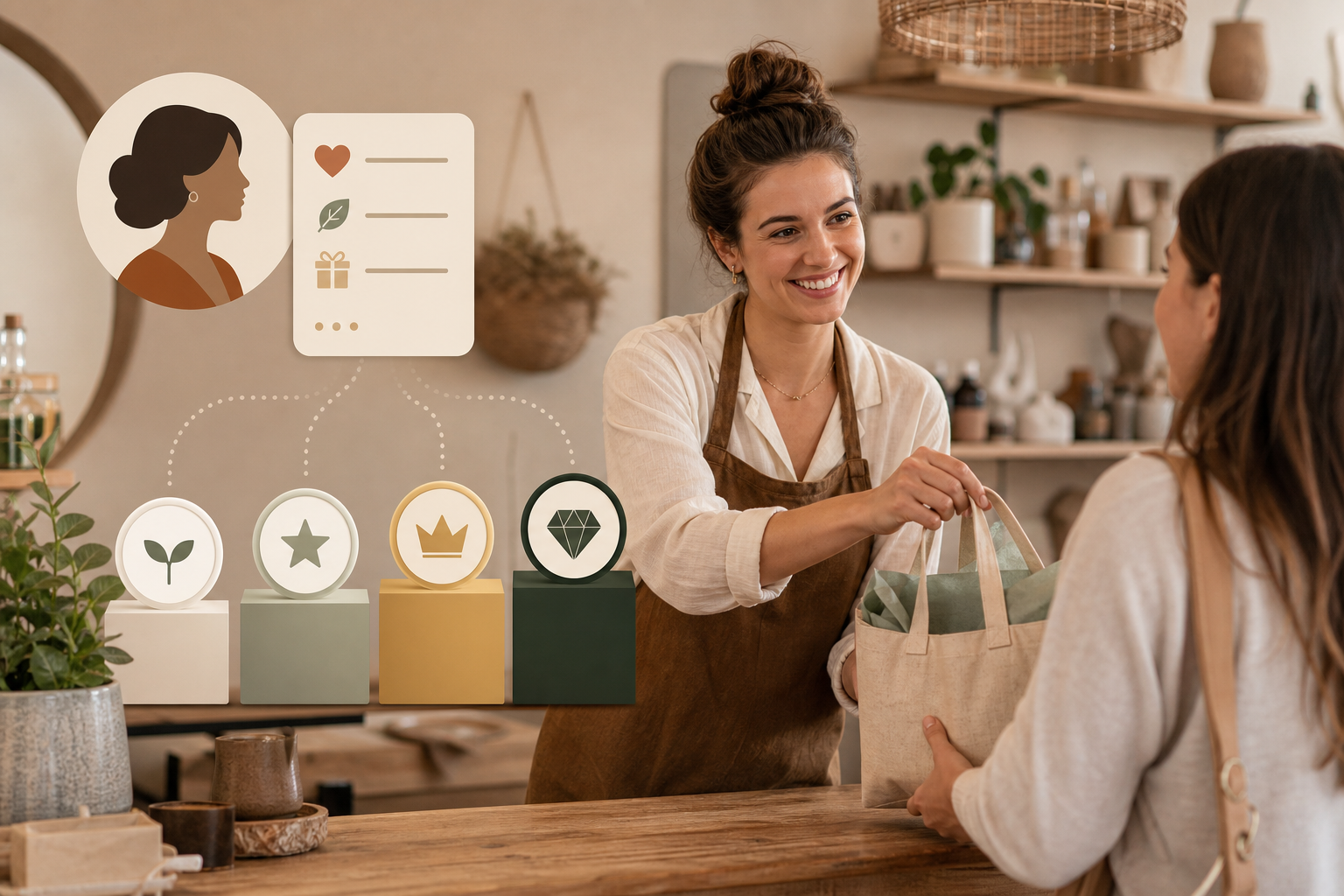
Generic loyalty programs are dying. Eighty-two percent of customers now demand individualized offers, yet most small shops still guess what their customers want. The result? Wasted budget on rewards nobody cares about and compliance headaches as 2026 privacy laws tighten.
The solution is a zero party data loyalty program: rewards built on what customers tell you directly, not what you assume. By replacing guesswork with simple surveys, you create VIP tiers that comply with evolving regulations while delivering the personalization shoppers actually expect.
Why Guessing at Loyalty Fails
Broad goals like increase loyalty sound strategic but collapse under scrutiny. When you assume all customers want the same reward, you ignore the data: eighty-four percent of customers earning fifty thousand to one hundred thousand dollars annually participate in loyalty programs, but that drops to seventy-six percent for those under fifty thousand dollars. Income alone reshapes motivation. Lower-income shoppers prioritize discounts. Higher earners want exclusivity and service.
Without asking, you waste points on perks nobody redeems. Worse, you risk non-compliance. Third-party tracking is legally restricted in 2026. Inferring preferences from browsing behavior puts you in regulatory crosshairs. Direct input, volunteered by the customer, is both safer and more accurate.
Loyalty programs deliver an average return of four point eight to five point three times your investment. A five percent increase in retention can boost profits by up to ninety-five percent. But only if the rewards match what your customers actually value.
What Zero Party Data Means for Small Shops
Zero party data is information a customer intentionally shares with your business. Not tracked. Not inferred. Volunteered. In a zero party data loyalty program, you ask customers what they want, then build tiers around their answers.
This matters because seventy-six percent of customers say loyalty program membership influences their decision to buy again. When you use survey responses to create targeted VIP tiers, like an Early Access Club for collectors or a Savers Club for discount hunters, you align rewards with real motivations. In hospitality, loyalty members generate thirty percent more revenue per visit than non-members. Retail sees eighty-three percent of customers cite loyalty programs as a factor in repeat purchases.
The shift is generational. Fifty-nine percent of people are more likely to join a loyalty program than they were twelve months ago. That rate jumps to seventy-one percent for Gen Z and seventy-two percent for Millennials. These cohorts expect relevance, not generic points.
How to Build Survey-Based VIP Tiers
Start with a short survey at signup or after the first purchase. Ask three questions: What kind of reward motivates you most? Discount, free shipping, early access, or exclusive event. How often do you prefer to shop? What is your preferred contact method?
Segment responses into three lists. Budget-focused customers form one tier. Experience seekers form another. Status-driven shoppers form the third. Then create named programs for each.
Tier one is the Saver. These customers prioritize immediate value. Offer ten percent off or convert points directly to cash discounts. Reward quickly, within two to three visits. Small frequent rewards build habits better than large infrequent ones.
Tier two is the Explorer. These shoppers value access over savings. Give them twenty-four hour early access to new products or free shipping thresholds that match their purchase frequency. They will spend more per transaction if they feel like insiders.
Tier three is the VIP Collector. Target customers earning over one hundred thousand dollars annually who survey as status-focused. Offer a dedicated support line, invite-only events, or personalized product bundles. Exclusivity, not discounts, drives their loyalty.
Do not use a single ten points equals one item rule across all tiers. Personalization requires segmentation. If a customer told you they want early access, sending them a five dollar coupon is a missed opportunity.
2026 Privacy Compliance for Direct Data Collection
Transparency is not optional. Your privacy notice must explain what data you collect, why you need it, how it is used, and how customers can opt out or delete their information.
Under California CCPA rules, you need opt-in consent for financial incentives like join for ten percent off. You must disclose the estimated value of the data collected. When a customer joins, show a plain-language summary: We collect your email and purchase history to send you personalized discounts. You can opt out via the link in every email.
Colorado CPA does not require opt-in for loyalty programs but mandates notice regarding third-party access and a clear data deletion process. If a customer requests deletion, respond within twenty-four hours with an explanation of how you will fulfill it. Ensure your survey tool and database can execute this instantly.
Avoid dark patterns. The opt-out button must be easy to find and one-click accessible. Do not bury it in settings or require a phone call. Data minimization applies: only collect what you need for the specific reward tier. If you only offer discounts, do not ask for a birthday.
Non-compliance is expensive. Violations trigger per-incident fines and damage trust. Customers who volunteer zero party data expect you to handle it responsibly.
Implementation Checklist
Launch a survey using a simple tool like Google Forms or Typeform. Keep it under three questions. Ask what rewards matter and how often they shop.
Segment your database based on answers. Create three lists: Discount, Experience, Status. Tag each customer in your point-of-sale or email system.
Define VIP tiers with specific names and benefits. Write the rules clearly. The Saver gets ten percent off every fifth purchase. The Explorer gets early access to new inventory. The VIP Collector gets a quarterly invite-only event.
Draft privacy notices in plain language. Display them at signup and in every program email. Include a one-click opt-out link.
Set up automation so the correct reward applies based on tier. If a customer is tagged Explorer, your system should automatically send the early access email when new products launch.
Audit deletion capability. Verify you can remove a customer record within twenty-four hours of a request. Test it quarterly.
Why This Works Now
Customers are signing up because they want relevance. Seventy-one percent of Gen Z and seventy-two percent of Millennials are joining programs at higher rates than a year ago. If you give them the specific rewards they asked for, you tap into the ninety-five percent profit boost that comes from a five percent retention increase.
Third-party data is fading. Cookie deprecation and state privacy laws make inference risky. Zero party data is both compliant and more accurate. When a customer tells you they want free shipping, you do not need to guess.
Small frequent rewards outperform large distant ones. A tier system that delivers value every two to three visits keeps engagement high. Eighty-three percent of retail customers say loyalty programs influence repeat purchases, but only when the rewards match their preferences.
Hyper-personalized VIP tiers are not complex. They are direct. Ask what customers want. Build tiers around their answers. Automate the delivery. Stay compliant with transparent notices and fast deletion. The shops that win in 2026 will be the ones that stopped guessing and started asking.
Sources
- https://www.koleyjessen.com/insights/publications/how-to-conduct-customer-loyalty-programs-that-comply-with-data-privacy-laws
- https://redcloveradvisors.com/loyalty-program-compliance/
- https://www.fastcompany.com/91533502/customer-loyalty-rules-for-2026
- https://www.comarch.com/trade-and-services/loyalty-marketing/blog/how-to-launch-a-loyalty-program-7-mistakes-to-avoid/
- https://www.yotpo.com/blog/loyalty-program-marketing/
- https://www.stampme.com/blog/customer-retention-strategies-2026
- https://loyaltylion.com/blog/customer-loyalty-program-examples
- https://extension.psu.edu/using-loyalty-programs-to-attract-consumers-to-value-added-businesses/
- https://www.sheppard.com/insights/blogs/the-comprehensive-privacy-law-deluge-impact-on-loyalty-programs