
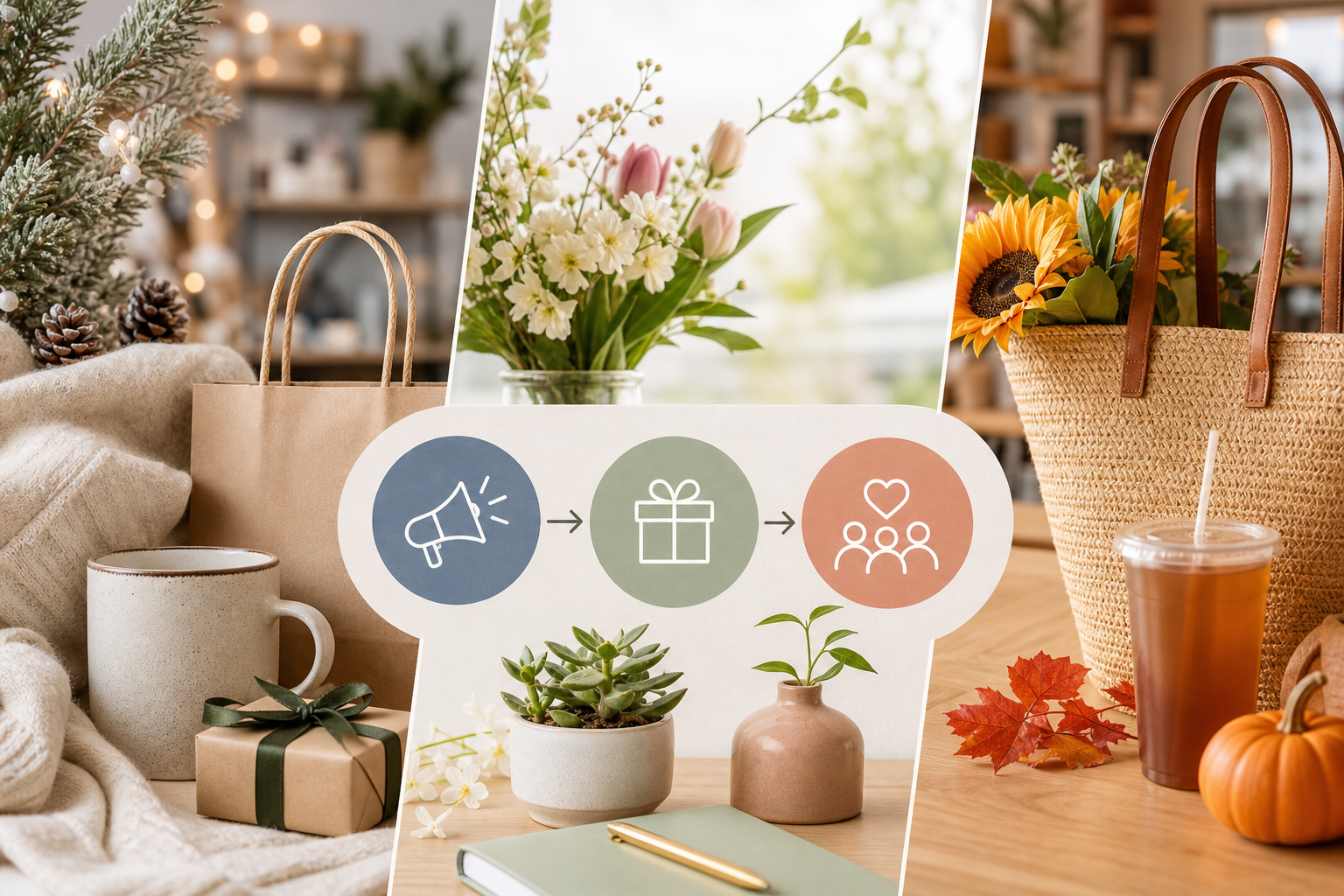
Seasonal peaks are when your shop sees the most new faces, but most small businesses treat every holiday the same way: run a sale, hope for volume, then watch those customers disappear. The smarter play is to use each holiday as a loyalty trigger that converts one-time buyers into repeat visitors.
This playbook shows you how to structure seasonal loyalty program ideas for small business around three phases pre-heat, peak, and afterglow so you reward existing customers first, capture referrals at the moment of highest excitement, and lock in a second visit before the holiday glow fades.
Why most seasonal campaigns fail to build loyalty
Most holiday promotions are built for acquisition, not retention. You discount heavily to compete for attention, attract price-sensitive shoppers, and then never hear from them again. The result is a revenue spike with no lasting customer value.
The fix is to flip your effort split. Reserve about 50 percent of your seasonal marketing for rewarding existing loyalty members and 35 percent for public awareness. That means your best customers get early access, exclusive perks, and referral opportunities before you open the offer to everyone else.
When you use loyalty members as the first audience, response rates are higher and the campaign builds momentum before you spend on broader channels.
The three-phase structure for every seasonal campaign
Every effective seasonal loyalty campaign follows the same rhythm: pre-heat, peak, and afterglow. This structure works whether you are planning for Valentine's Day, Mother's Day, or the year-end holidays.
Pre-heat is the window before the buying frenzy starts. Use this time to send a teaser or early-access offer to your loyalty members. Collect preferences or segment your list so the eventual offer feels personalized instead of generic. The goal is to prime your best customers and give them a reason to shop with you first.
Peak is the main buying window. Keep the offer simple, time-limited, and tied to the holiday emotion. Use one clear reward such as bonus points, a limited-edition bundle, or early access to a popular product. At the moment of purchase, add a referral prompt or bring-a-friend offer so the customer can share the experience immediately.
Afterglow is the follow-up after the holiday ends. Send a thank-you message plus a bounce-back reward that expires soon to encourage a second visit. This is where you convert holiday buyers into repeat customers by giving them a reason to come back before they forget about your shop.
Step-by-step playbook for Valentine's Day
Valentine's Day is a high-urgency, high-emotion holiday with a short buying window. Start your campaign in early January with a VIP teaser for loyalty members.
In the pre-heat phase, send an email in mid-January announcing early-bird access to a Valentine's bundle or double points on all purchases made before February 1. This rewards your existing customers and generates early revenue before the last-minute rush.
During the peak window from February 1 to 14, keep the offer clear and urgent. A simple example is double points on all purchases made February 1 through 14, plus a referral bonus if the friend redeems within 7 days. Add urgency cues for last-minute shoppers, such as same-day pickup or a member-only gift option.
In the afterglow phase, send a thank-you note on February 15 with a bounce-back offer that expires within two weeks. For example, visit once more by the end of February and get a small discount or bonus points on your next purchase. Track how many Valentine's customers return in this window, because that metric tells you whether the campaign built loyalty or just drove a one-time sale.
Step-by-step playbook for Mother's Day
Mother's Day is a gifting holiday, so frame your campaign around appreciation and thoughtfulness. Start planning 4 to 6 weeks out.
In pre-heat, give loyalty members 48-hour early access to a Mother's Day gift set or curated gift guide. Personalize the offer by segmenting customers who have bought gifts before or who have indicated preferences in past purchases. Early access makes the shopping experience easier and rewards members for their loyalty.
During the peak window in early May, launch the public campaign with one clear perk. An example is members get 48-hour early access to our Mother's Day gift set, and every purchase includes a shareable referral code for a friend. The referral code turns your customers into advocates at the moment they are most excited about their purchase.
In afterglow, follow up within a week of Mother's Day with a thank-you message and a time-limited reward. Offer a small perk such as bonus points on the next visit or a discount valid only through the end of May. The short expiration window creates urgency and pulls forward the next purchase.
Step-by-step playbook for year-end holidays
The year-end holiday season is the longest and most competitive, so start planning 10 to 12 weeks before Christmas. Use the three-phase structure to reward repeat behavior, not just holiday volume.
In pre-heat during October and early November, launch personalized thank-you campaigns or a holiday preview for loyalty members. Segment your list by past purchase behavior and send tailored gift suggestions or early-bird offers. This builds anticipation and positions your shop as the first stop for holiday shopping.
During the peak window from late November through December, use a simple reward booster. For example, visit once in December and get a January perk, or refer a new customer and both of you get a reward. Keep the messaging seasonal and emotional, not just transactional. Tie the reward to behaviors you want repeated, such as a second visit or a referral.
In afterglow starting within two weeks of Christmas, send a holiday thank-you message with a short-term bounce-back reward that expires in January. This is your best chance to convert gift buyers and one-time holiday shoppers into repeat customers. Track the next visit window closely so the reward lands before the customer forgets your brand.
How to build referral prompts into every campaign
Referral programs work best when both the referrer and the referred customer benefit. At the moment of purchase, add a simple prompt that makes sharing easy and rewarding.
During checkout, include a referral code or shareable link that gives the new customer a welcome perk and gives the original customer bonus points or a discount on their next visit. The key is to make the referral immediate and tied to the holiday moment, when excitement is highest.
For example, after a Valentine's Day purchase, send an email that says share this code with a friend and you both get double points on your next purchase within 7 days. The short window creates urgency and increases redemption rates.
Measure referral redemptions separately from overall campaign performance so you can see which holidays generate the most word-of-mouth growth.
What to measure to hit 3x repeat visits
Most shops measure holiday success by total revenue, but that number hides whether you built loyalty or just rented attention. Track these metrics instead.
Repeat visit rate is the percentage of holiday buyers who return within 30 days. Compare this to your baseline repeat rate to see if the campaign actually moved behavior.
Referral redemption rate is the percentage of referral codes that get used. Low redemption means the offer was not compelling or the window was too short.
Incremental revenue is the revenue from the second and third visits, not just the holiday purchase. This is the number that tells you whether the campaign paid off long-term.
Time to next visit is how quickly customers come back after the holiday. If the average is longer than 30 days, your bounce-back offer was not urgent enough.
Simple seasonal offers you can copy
Here are three ready-to-use campaign templates, one for each major holiday.
Valentine's Day: Double points on all purchases made February 1 through 14, plus a referral bonus if your friend redeems within 7 days.
Mother's Day: Members get 48-hour early access to our Mother's Day gift set, and every purchase includes a shareable referral code for a friend.
Year-end holidays: Holiday thank-you bonus, visit once in December and get a January perk, refer a new customer and both of you get a reward.
Each template uses a short time window, one easy reward, and a clear call to action. Customize the specifics to fit your product mix and customer preferences, but keep the structure intact.
Best-practice rules to maximize repeat visits
Make every offer time-limited so it creates urgency. Open-ended rewards do not drive immediate action.
Tie the reward to a behavior you want repeated, such as a second visit, a referral, or a gift-card redemption. Do not reward one-time transactions.
Keep the messaging seasonal and emotional, not just transactional. Customers respond to appreciation and exclusivity, not just discounts.
Use loyalty members as the first audience because they are already more likely to respond than cold traffic. Launch to your list before you spend on ads.
Track the next visit window closely so the bounce-back reward lands before the customer forgets the brand. Two weeks is the maximum window for most afterglow offers.
Bringing it all together
Seasonal loyalty program ideas for small business work when you treat holidays as loyalty-building opportunities, not just revenue events. The three-phase playbook pre-heat, peak, and afterglow gives you a repeatable structure that rewards existing customers first, captures referrals at the moment of highest excitement, and locks in repeat visits before the holiday fades.
Start with one holiday, test the playbook, measure repeat visit rates, and refine the timing and offers based on what your customers actually redeem. The goal is not to run the biggest sale, but to turn seasonal shoppers into year-round regulars.
Sources
- https://playerence.com/seasonal-and-campaign-marketing/seasonal-quiz-campaigns-2025/
- https://www.dublinchamberofcommerce.org/2025/07/29/9-customer-loyalty-programs-that-work/
- https://loyalthinking.com/2025/05/5-loyalty-program-ideas-for-local-businesses/
- https://bartenmedia.com/winter-marketing-ideas-for-small-businesses-2025-guide/
- https://www.loyalty-works.com/seasonal-loyalty-campaigns/
- https://www.stampme.com/blog/us-seasonal-marketing-for-small-business
- https://www.mytallyrewards.com/post/seasonal-loyalty-campaign-ideas
- https://www.godaddy.com/resources/asia/skills/12-valentines-day-marketing-strategies
- https://bossithq.com/2025/01/29/valentines-day-marketing-playbook-for-qsrs-takeaway-brands-%E2%9D%A4%EF%B8%8F%F0%9F%8D%94%F0%9F%8D%95/
- https://reddooradvertising.com/2025/01/28/8-valentines-day-marketing-ideas-for-your-business/
- https://www.tremendous.com/blog/holiday-promotion-inspiration/
- https://clevertap.com/blog/valentines-day-marketing-ideas-for-restaurants-bars/
- https://blog.overnightprints.com/valentines-day-marketing-for-small-businesses-retention/
- https://www.linkedin.com/pulse/10-valentines-day-marketing-ideas-small-businesses-viki-sisnette-i42wc
- https://stampyapp.me/blogs/holiday-loyalty-campaign-ideas